
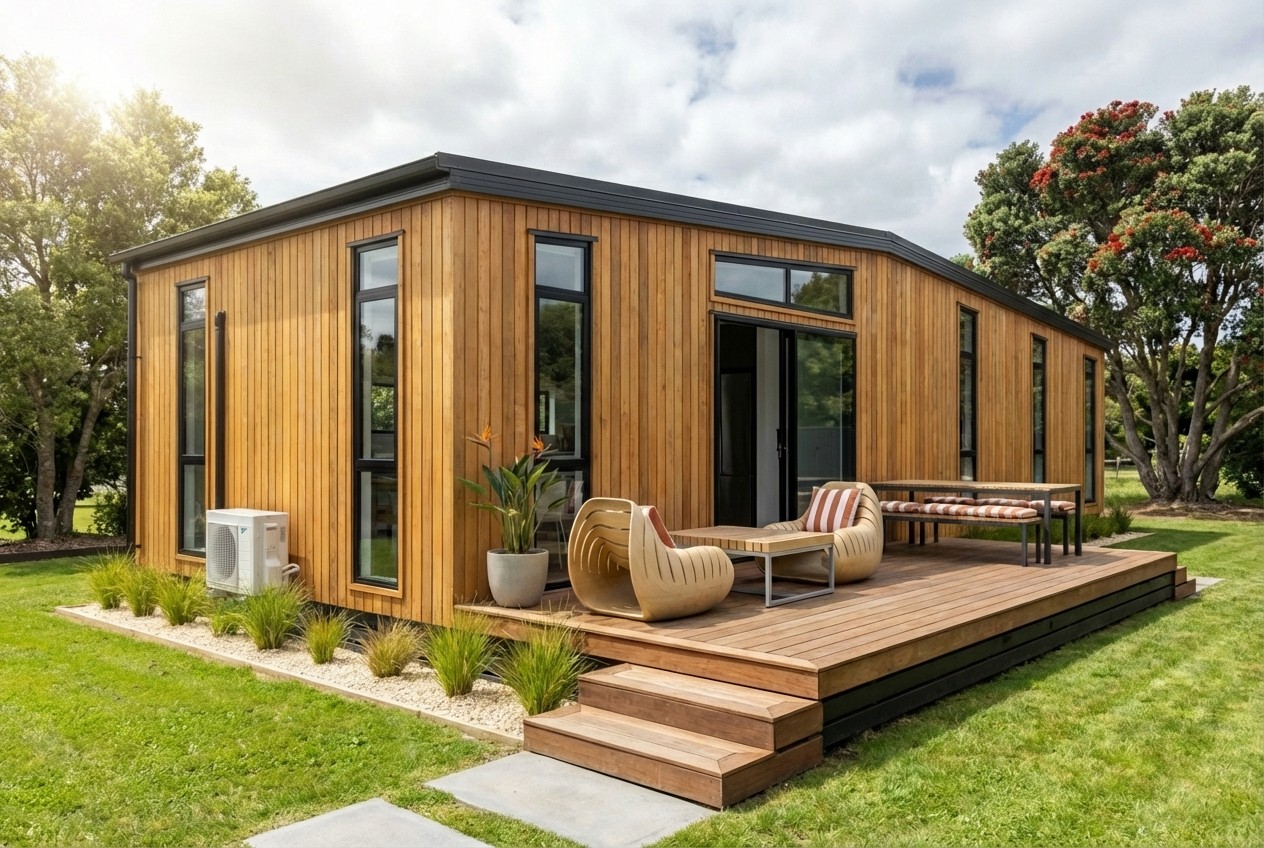
South Base Homes builds architecturally designed tiny homes — compact, bespoke, and built with care. But there was a persistent problem sitting upstream of every sales conversation: getting great imagery of the homes.
The traditional process required the home to be finished, a photographer booked, a stylist engaged, a weather window secured, and a scheduling window where the home was actually available. Every one of those variables had to align for a single usable shoot. And even when they did, the results weren't always consistent — different homes, different conditions, different light.
A problem built into the process
The challenge wasn't just cost and effort (though both were significant). It was timing. South Base Homes needed compelling, customer-facing visuals early in the sales cycle — on their website, in brochures, in ad campaigns — long before a given home was ready to photograph. Architectural renders existed, but they looked like renders: clean, but unconvincing.
There was also the consistency problem. When imagery is produced across different photographers, stylists, and conditions, the result is a portfolio that doesn't hang together. Cohesive brand presentation becomes almost impossible.
How we designed it
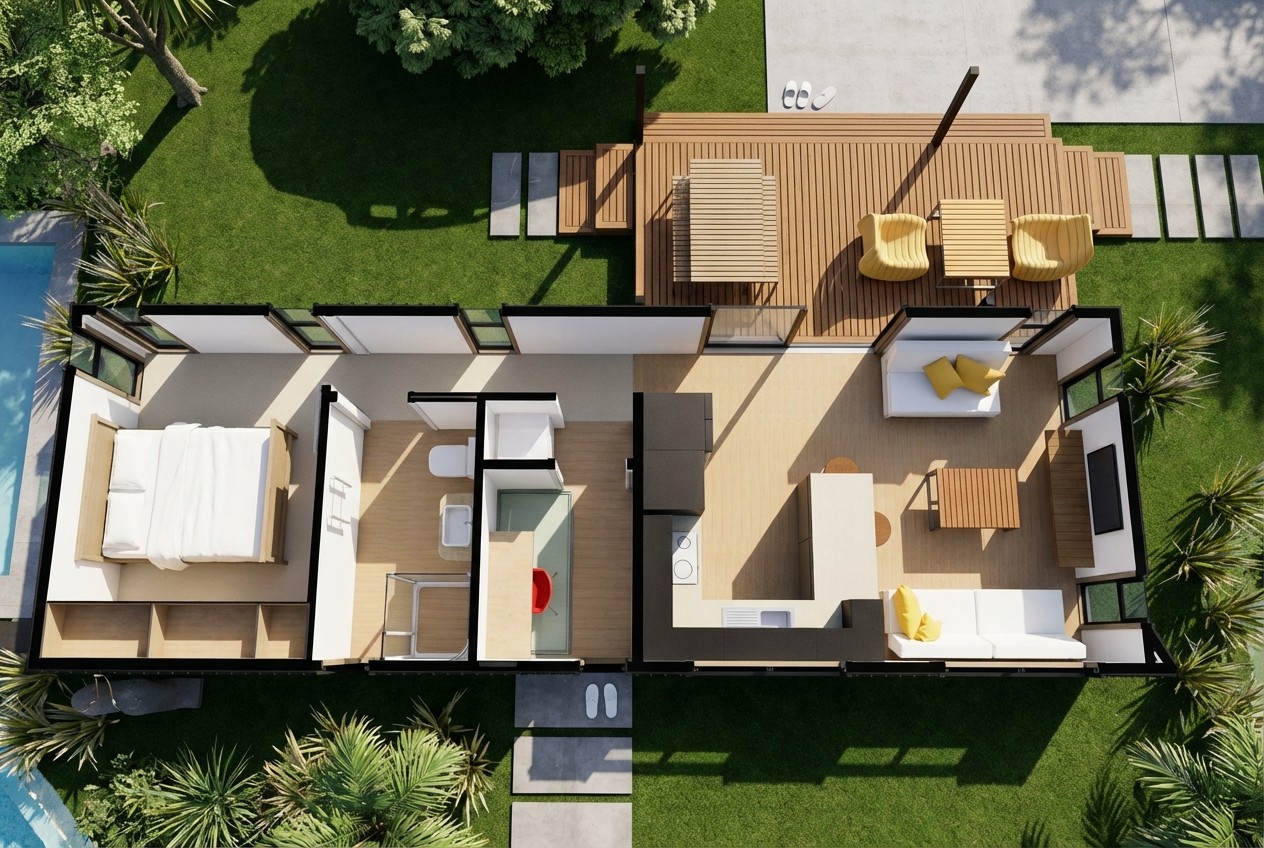
Claire worked with South Base Homes to design a repeatable AI imagery workflow that takes architectural renders as input and outputs photorealistic visuals ready for customer-facing use. The workflow was built around three specific requirements.
Workflow Requirements
- Premium, architectural look and feel — not 'AI-generated', but indistinguishable from a quality photoshoot
- Consistency across products — same lighting language, same aesthetic, same sense of realism regardless of which model or setting
- Output quality suitable for website, brochure, and advertising use without further post-production
The workflow also handles the reverse case: updating existing imagery to bring older photos in line with the desired aesthetic. This gave South Base Homes a way to refresh their back-catalogue without reshooting.
Consistency, not just lucky outcomes
The hardest part of designing a reliable AI imagery workflow isn't getting one great result. It's getting great results reliably. Early iterations produced outputs that ranged from excellent to unusable within the same session. That variability is a problem when you're producing assets for a brand.
The bulk of the work was in the tuning: refining the prompt structures, the style parameters, and the input conditioning until the workflow delivered at a consistent standard — not occasionally, but predictably. That's what separates a useful workflow from an interesting experiment.
"Anyone can get lucky with an AI image. The goal was to make luck irrelevant — a workflow that South Base Homes could run on a Monday morning and trust."
— Claire Byrne
Building capability that stays
The second key deliverable was training. The workflow is only valuable if the team knows how to run it — and knows what to do when the output isn't quite right. That means understanding not just the mechanics, but the reasoning: why certain inputs produce better results, what to adjust when consistency slips, how to run the workflow the way you'd brief a photographer.
South Base Homes now runs this capability in-house. They're not reliant on Claire for ongoing output — the workflow and the expertise all live within their business.
What South Base Homes walked away with
- A repeatable AI imagery workflow producing photorealistic visuals from architectural renders
- Consistent brand aesthetic across all product imagery, pre- and post-build
- The ability to update existing imagery to match the desired look
- A trained internal team with the expertise to run and maintain the capability independently